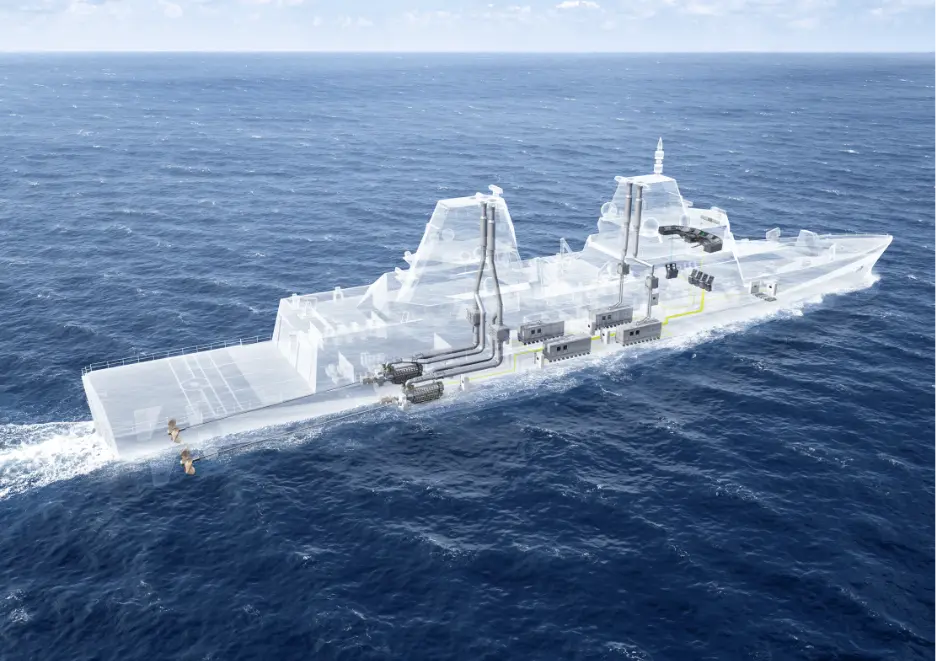
Procurement teams should evaluate marine propulsion against five linked criteria: mission fit, proven platform experience, regional support, lifecycle cost and integration risk. The strongest solution is not necessarily the lowest-priced or highest-powered engine; it is the propulsion package that can meet operational requirements and remain supportable throughout the vessel’s service life.
The Procurement Question Is Different for Government Fleets
Commercial vessels often prioritise fuel economy, operating cost and return on investment. Government and naval vessels must also prioritise mission readiness: the ability to deliver the required speed, response, availability and resilience when operational demands arise.
A patrol vessel, for example, may spend extended periods at low speed before requiring rapid acceleration. Other vessels may need frequent manoeuvring, sustained high-speed operation or continued propulsion when part of the system is unavailable. These operating scenarios affect engine loading, response requirements, redundancy and support planning.
This makes the propulsion specification closely linked to the vessel’s mission profile.
Procurement teams should therefore ask:
- What operating speeds and load conditions will the vessel encounter?
- How frequently will it transition between low-speed and high-speed operation?
- What acceleration and response characteristics are required?
- What noise and vibration requirements apply?
- What level of redundancy is required?
- How will the vessel operate if part of the propulsion system becomes unavailable?
For naval applications, these considerations may extend to shock resistance, acoustic performance, control-system redundancy and compliance with applicable military or naval standards.
The objective is not simply to buy an engine with sufficient power. It is to select a propulsion system that supports the vessel’s operational role.
Start With the Manufacturer’s Track Record
For a government or naval fleet, propulsion equipment may remain in service for decades. The manufacturer’s experience with demanding marine and defence applications is therefore an important procurement consideration.
A proven engine platform offers more than brand recognition. Its service history can provide evidence for configuration stability, parts support, maintenance planning and the manufacturer’s ability to sustain technical support over the vessel’s operating life.
This becomes particularly important for fleets with long service lives. Procurement teams should consider whether the manufacturer and its authorised support network can continue providing:
- Technical documentation
- Control-system and software support
- Overhaul capability
- Technical training
- Product and configuration support
The current mtu marine defence portfolio spans 720 to 10,000 kW (966 to 13,410 bhp) across several engine series. This range demonstrates the platform’s breadth and relevance to defence applications; however, engine selection must still be based on the vessel’s mission, operating profile and technical requirements.
Local Support Is Part of Fleet Readiness

For a naval or governmental operator, after-sales support is not simply a service benefit. It can directly affect operational availability.
A vessel waiting for a critical component or specialist technician may not be available when required. Procurement teams should therefore evaluate the support infrastructure behind the propulsion supplier before awarding a contract.
Before awarding a contract, procurement teams should test whether the supplier’s support infrastructure can sustain required vessel availability. Key questions include where critical spare parts are held, how quickly qualified technicians can respond, whether maintenance and overhaul can be performed locally, how technical issues are escalated to the manufacturer, and whether technicians hold relevant manufacturer training and certification.
Al Masaood Power Division has regional marine operations across the UAE, Iraq and Bahrain, with mtu represented across these three markets and Volvo Penta represented in the UAE and Bahrain. The division provides marine installation, commissioning, diagnostics, maintenance, overhaul and technical support.
For fleet operators, this regional infrastructure may reduce dependence on overseas intervention, shorten maintenance response times and improve access to technical support, subject to the location, required capability and availability of parts and personnel.
Evaluate Lifecycle Cost, Not Purchase Price Alone
Initial CAPEX is visible. The costs that accumulate during years of operation are not.
For a marine propulsion system, procurement teams should evaluate the total cost of ownership over a defined service period.
Lifecycle-cost evaluation should combine acquisition cost, fuel consumption, scheduled maintenance, major overhauls, spare parts, downtime and technical support. Procurement teams should state the operating assumptions, maintenance intervals, expected utilisation and downtime cost used in the comparison so that supplier proposals can be assessed on a consistent basis.
The weighting of these factors will depend on the vessel’s mission and operating profile.
A vessel that spends substantial time operating at variable loads may place different demands on its propulsion system from one that operates predominantly at a steady cruising condition.
Modern propulsion systems can incorporate monitoring and automation that support condition-based maintenance and maintenance planning. Their value depends on suitable sensors, data quality, diagnostic capability, trained personnel and clear maintenance processes. Procurement teams should therefore assess both the technology and the organization required to use it effectively across the engine’s operating life.
The procurement objective should therefore be long-term operational value, rather than the lowest initial equipment price.
Assess New-Build and Repowering Projects Differently
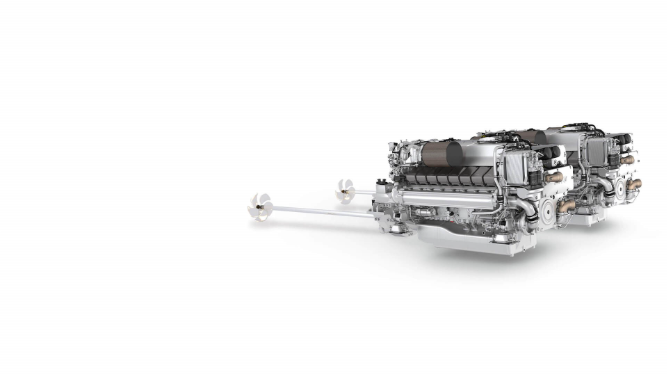
The propulsion supplier’s role can change considerably depending on whether the vessel is being built from the keel up or being upgraded.
New-build vessels
A new-build provides greater freedom to design the vessel around the propulsion package. That makes early coordination essential.
The propulsion system needs to interface correctly with the vessel’s automation, monitoring, control, navigation and power-management systems.
Procurement teams should involve the propulsion supplier early enough to define interface-control requirements, installation constraints, equipment responsibilities, commissioning scope, acceptance criteria and performance guarantees.
The aim is to minimise integration and commissioning risks before the vessel reaches the final stages of construction.
Repowering projects
Repowering starts from the opposite position.
The new engine must work within an existing vessel architecture. Engine-room space, foundations, shafting, exhaust arrangements, cooling systems, weight distribution and auxiliary equipment may all constrain the available options.
The question becomes:
Can the new propulsion package deliver the required performance within the vessel’s existing physical and technical constraints, while maintaining acceptable stability, reliability, classification compliance, downtime and project cost?
This is where engineering support becomes particularly valuable. A successful repowering project is not simply about finding a more powerful engine. It is about achieving the required performance while controlling modification work, vessel downtime and project cost.
Match the Available Propulsion Range to the Mission
Al Masaood Power Division represents both Volvo Penta and mtu for marine applications, providing access to propulsion solutions suited to different vessel and mission requirements.
Volvo Penta’s D13 marine engine range extends from 700 to 1,000 hp (515 to 735 kW), with the 1,000 hp configuration providing the upper end of this particular range.
At the higher end of the power spectrum, the current mtu marine defence portfolio extends from 720 to 10,000 kW (966 to 13,410 bhp) across multiple engine series.
These figures demonstrate the breadth of available propulsion platforms, but they should not be treated as a substitute for engineering assessment. Vessel displacement, mission profile, speed requirements, installation constraints and applicable standards all need to be considered before selecting a specific engine.
Five Questions to Ask a Marine Propulsion Supplier
Before shortlisting suppliers, procurement teams should seek clear answers to five areas:
| Procurement area | What to establish |
| Mission fit | Does the propulsion system match the vessel’s operating profile? |
| Proven experience | Where has the platform been deployed in comparable marine or governmental applications? |
| Local support | What technical, maintenance and overhaul capability is available in the region? |
| Parts availability | How are critical genuine spare parts sourced and supplied? |
| Lifecycle support | What support and maintenance strategy exists for the expected service life? |
These questions can reveal differences between suppliers that are not always visible in an initial equipment quotation.
Before contract award, procurement teams should verify manufacturer authorisations, certification status, regional service coverage, parts commitments and comparable reference installations through current supplier documentation and contractual evidence.
Why Al Masaood Power Is More Than an Supplier
Al Masaood Power Division combines more than five decades of regional experience with authorised manufacturer relationships and local technical capability relevant to marine propulsion selection, integration and lifecycle support.
The division is the authorised distributor of mtu, a Rolls-Royce solution, in the UAE, Iraq and Bahrain, and of Volvo Penta in the UAE and Bahrain.
Its marine support covers system selection, engineering, integration, commissioning, training, maintenance, overhaul and genuine spare parts, extending the supplier relationship from initial specification through long-term operation.
Factory-trained technicians and dedicated service facilities provide the technical infrastructure required to support marine assets after delivery.
For government and naval procurement teams, this creates a longer-term relationship around the asset rather than a transaction that ends when the vessel is delivered.
The Procurement Decision Should Extend Beyond Delivery
For a government or naval fleet, a propulsion system is a long-term operational asset.
The strongest procurement decision is not necessarily the lowest-priced or highest-powered engine. It is the propulsion solution that demonstrably meets the vessel’s mission and integration requirements, is backed by proven manufacturer experience and regional support, and remains maintainable throughout the fleet’s intended service life.
For procurement teams evaluating marine propulsion suppliers, one question is particularly important:
Who can support this propulsion system for as long as the vessel must remain operational?
Al Masaood Power Division provides marine propulsion and lifecycle support for government and naval applications, helping customers address new-build, repowering, maintenance and long-term fleet requirements.
Speak to Al Masaood Power Division to assess mission requirements, propulsion options, integration constraints and the lifecycle-support model for your vessel or fleet.