Choosing a UPS is often treated as a simple capacity exercise: calculate the critical load, select a UPS rating and proceed. In practice, this can produce an electrically acceptable solution that is far from commercially feasible. The right UPS architecture also affects electrical-room requirements, generator sizing, cooling demand, maintenance strategy, system complexity, short-circuit capability, footprint and the overall CAPEX and OPEX of a project.
Static UPS and Dynamic UPS (DUPS) technologies can both provide highly reliable no-break power, but their optimum application areas are not identical. This guide outlines four practical parameters to help engineers identify when a Dynamic UPS solution such as the mtu Kinetic PowerPack (KPP) should be considered during concept design.
Direct answer: A Dynamic UPS (DRUPS) combines an engine, generator and flywheel to maintain uninterrupted power during a mains failure, while a Static UPS uses batteries and power electronics. Both protect critical loads, but Dynamic UPS systems may suit large, concentrated loads, such as data centres, while Static UPS systems often suit smaller or distributed applications.
What Is a Dynamic UPS (DRUPS)?
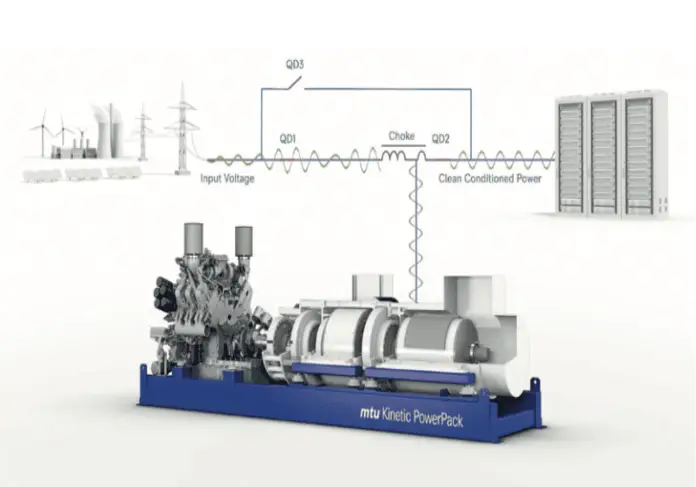
A Dynamic UPS (DUPS) is an uninterruptible power supply system that uses rotating mechanical equipment, typically a synchronous machine and a flywheel or kinetic energy storage system, rather than relying mainly on power-electronic converters and batteries. Some manufacturers refer to this technology as a Dynamic UPS (DUPS), while others use the term Dynamic Rotary UPS (DRUPS).
In these systems, energy stored as kinetic energy bridges the gap between a grid outage and the availability of the generator supply. Conventional Static UPS systems instead store energy chemically inside batteries.
What Is a Static UPS?
A Static UPS typically uses power-electronic converters and batteries to maintain the supply to protected equipment when the mains supply fails. Battery energy supports no-break loads while the standby generator starts. Static UPS systems can be installed close to individual load groups, and modular arrangements allow capacity and redundancy to be matched to each electrical zone.
The full installation may also require battery capacity and cabinets or rooms, DC protection, cooling, switchgear, standby-generator capacity and other auxiliary systems. These components should be included when comparing the total installed cost of the complete power-protection architecture.
Dynamic UPS vs Static UPS: Key Differences
The following comparison summarises the differences described in the design guide. Actual performance and cost depend on the selected equipment and project design.
| Selection factor | Dynamic UPS (DUPS/DRUPS) | Static UPS |
| Energy storage | Kinetic energy stored in a flywheel | Chemical energy stored in batteries |
| Main architecture | Rotating machinery, synchronous machine, flywheel, engine and alternator | Power-electronic converters, batteries and associated equipment |
| Smaller or distributed loads | Assess against the complete system economics | Can provide an economical, flexible modular solution |
| Large concentrated loads | May become more cost-effective as protected capacity increases | Additional modules and supporting infrastructure may be needed |
| Sizing considerations | No-break load influences flywheel sizing; total emergency load influences engine and alternator sizing | Battery capacity is based on protected load and required autonomy |
| Footprint | The source guide indicates around 40% less footprint than a conventional Static UPS arrangement | May require space for batteries, converters and associated equipment |
| Inductive loads | Synchronous machinery can support high starting-current requirements, subject to system design | Power-electronic current limits may lead to system oversizing |
Size and Concentration of Protected Loads
UPS selection should consider both the rated capacity of the protected load and the economic effect of implementing the complete power-protection system. Total critical load demand alone is insufficient: the designer should also consider how the load is divided into individual blocks and where UPS protection is applied.
For relatively small or distributed critical loads, Static UPS systems may provide an economical and flexible solution. Modular Static UPS arrangements can be installed close to individual load groups, allowing capacity and redundancy to be matched to each electrical zone.
As protected capacity increases, additional Static UPS modules may require more battery capacity, battery cabinets or rooms, DC protection, cooling, standby-generator capacity, switchgear and auxiliary systems. The comparison should therefore move from the cost of an individual UPS module to the total installed cost of the complete system.
Economic reference: For preliminary techno-economic studies, the source guide identifies more than 1,500 kVA per electrical block as a point at which Dynamic UPS systems may become more cost-effective. This is an approximate economic crossover, not a technical minimum; Dynamic UPS equipment is available below 1,500 kVA.
Ratio of No-Break to Short-Break Loads
Emergency loads consist of two categories:
- No-break loads: Loads that cannot tolerate any loss of power, even for milliseconds. Examples include IT loads in data centres, critical medical equipment in hospitals, airport radar systems and runway lighting.
- Short-break loads: Loads that can tolerate a short interruption while the generator starts, approximately 10 to 15 seconds according to the source guide. Examples include general lighting, chillers and pumps, subject to the requirements of the equipment.
UPS systems cover no-break loads, while the generator covers the whole emergency load, including both no-break and short-break loads. In a Dynamic UPS system, the no-break load affects flywheel sizing, while the total emergency load affects engine and alternator sizing.
Rule of thumb: The source guide identifies Dynamic UPS systems as potentially commercially feasible when no-break loads represent 50% or more of the total emergency load. This is often relevant to data centres, hospitals, critical airport systems, broadcasting stations and critical process manufacturing facilities. The ratio should be treated as a preliminary guide, not a standalone selection rule.
Area Limitations
The source guide identifies a potential footprint reduction of approximately 40% for Dynamic UPS compared with a conventional Static UPS system. Static UPS installations may include inverter/converter sets, power-factor-correction panels, batteries, harmonic filters, automatic transfer switches and generator sets.
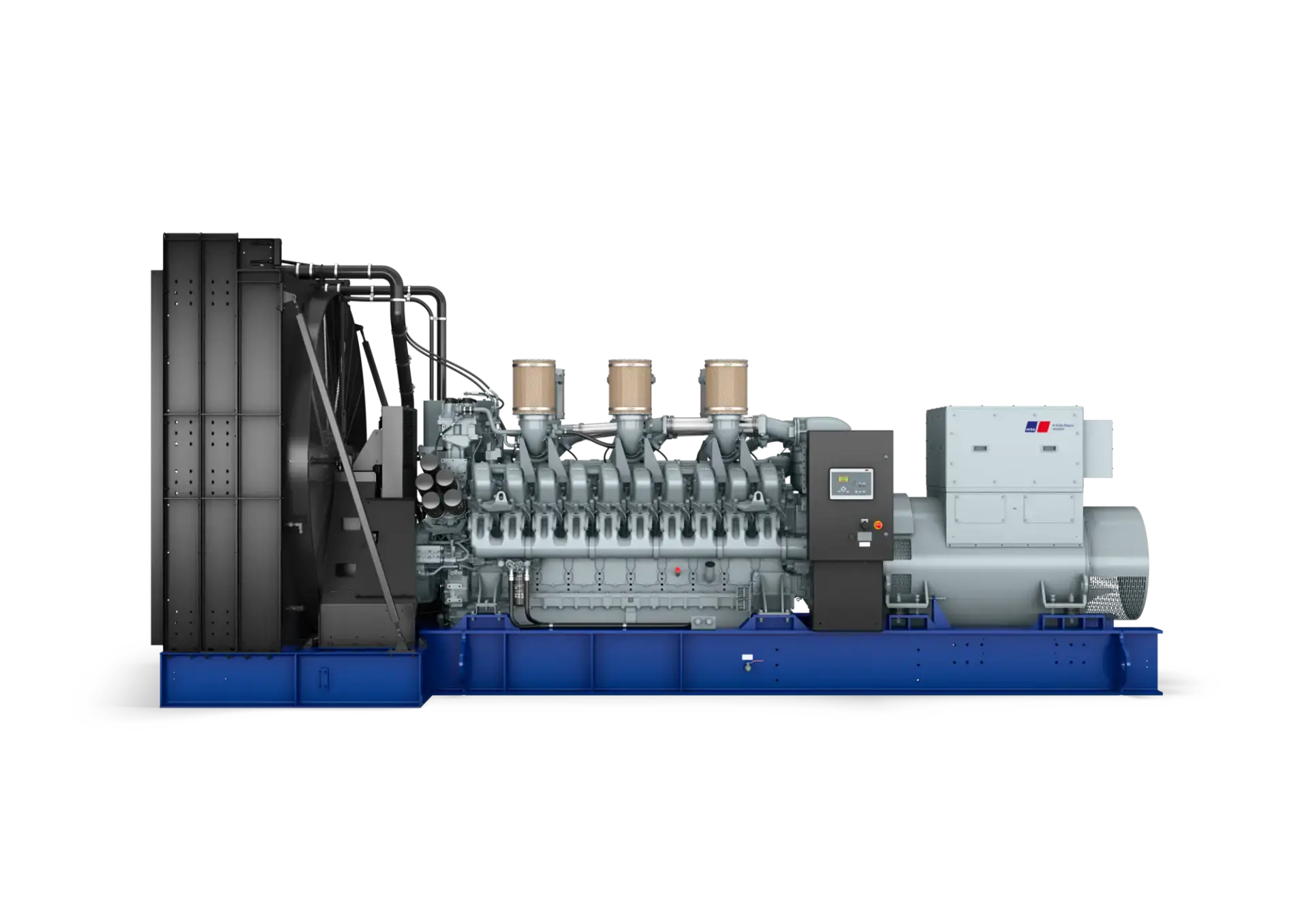
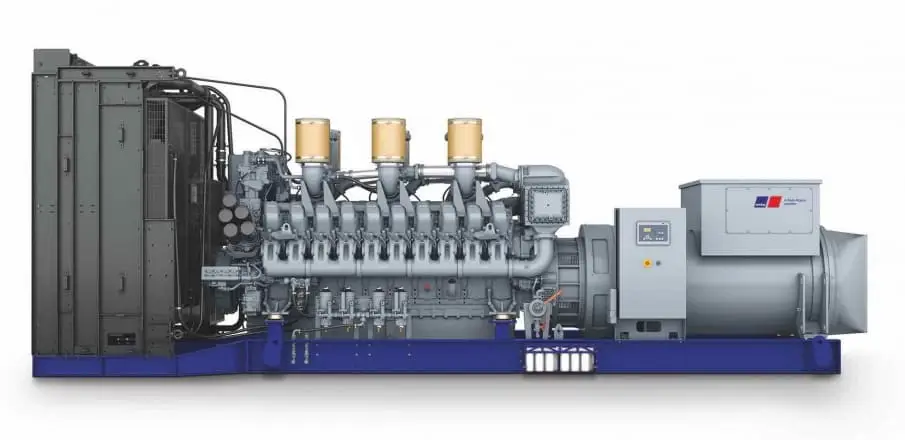
Unlike a conventional Static UPS arrangement, a Dynamic UPS can use an integrated set comprising the engine, alternator and flywheel, together with power and control panels. This can reduce the need for separate battery rooms and space for associated components. Actual footprint savings depend on the equipment and installation layout.
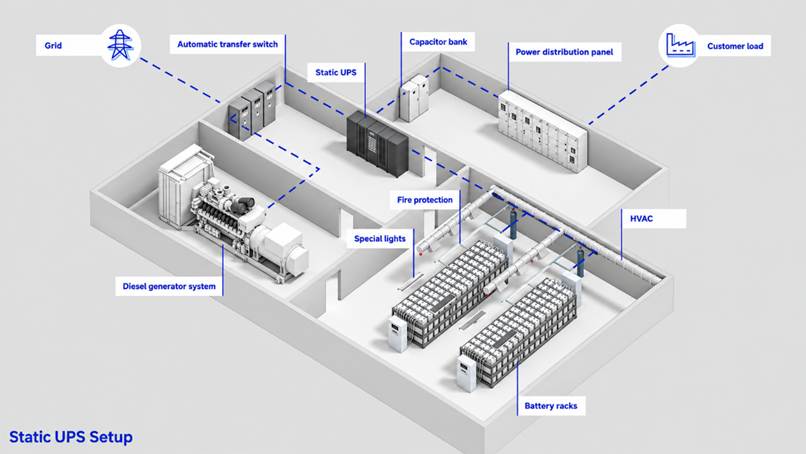
Figure 2. Conventional Static UPS setup
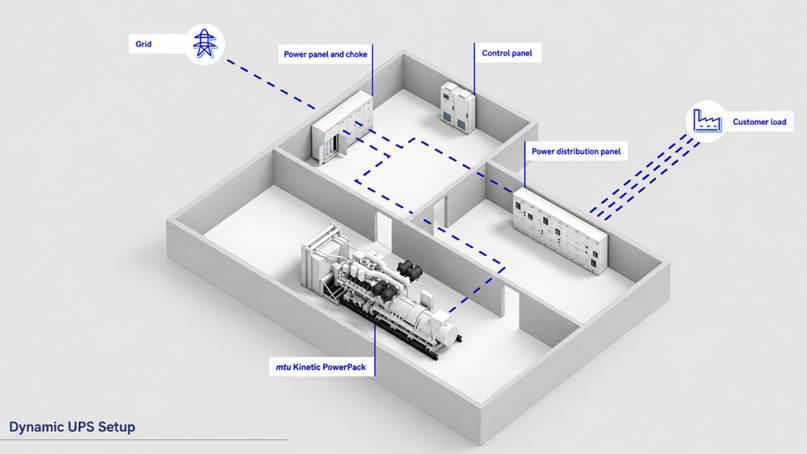
Figure 3. Dynamic UPS setup
Inductive Loads
Inductive loads require higher starting currents. Because a Static UPS relies on power electronics to convert DC power to AC, it has limits on starting-current capability. Meeting these requirements may therefore require oversizing the conventional UPS system.
A Dynamic UPS provides backup power through a synchronous machine that can support high starting-current requirements, subject to the equipment ratings and system design. In suitable applications, this can reduce the need to oversize the system and lower overall system cost.
Selecting the Optimum UPS
Selecting the optimum UPS requires evaluating the complete power-protection architecture, not only the connected critical load. Static UPS systems remain well suited to smaller, distributed loads that benefit from modular flexibility. For larger, concentrated load blocks, Dynamic UPS can deliver stronger lifecycle economics and a substantially smaller footprint, depending on the project requirements.
Plan Your Dynamic UPS System
Al Masaood Power Division is the authorised distributor of mtu, a Rolls-Royce Solution, in the UAE, Iraq and Bahrain. With more than five decades of experience in power solutions, the division combines regional knowledge with international engineering practices to support customers from consultation and design through installation and after-sales service.
Design your DUPS single-line diagram with the mtu SLD Builder, or contact Al Masaood Power Division for expert support with your project.
Is a Dynamic UPS more reliable than a Static UPS?
Both technologies can provide highly reliable no-break power when correctly designed for the application. Reliability depends on the complete system architecture, component selection, redundancy, maintenance and operating requirements.
What maintenance does a DRUPS system require?
A DRUPS system requires maintenance of its engine, alternator, rotating machinery, flywheel, controls and associated electrical equipment. Specific tasks and intervals should be confirmed against the selected manufacturer’s documentation and operating conditions.
Can a Dynamic UPS be used for hospitals as well as data centres?
Yes. Dynamic UPS systems can be considered for hospitals and data centres where the load profile and wider emergency-power architecture support the solution. The design must account for no-break and short-break loads, redundancy and applicable requirements.